
Margaret Archer is a british professor of sociologist who had change the history of sociology because she criticized an important author in this area: Pierre Bourdieu, one of the most relevant authors of the XX century. Also she developed her ‘Morphogenetic Approach’ to social theory. She was elected as the first woman President of the International Sociological Association at the 12th World Congress of Sociology.
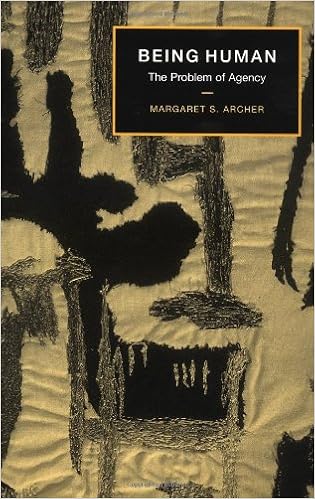 She think that it is fundamental to be concerned with the "problem of structure and agency", that is with justifying these as irreducible entities with their own emergent properties and powers. From that follows the question of how to theorise the interplay between society, culture, structure and its human agents and to explain how their interaction leads to an elaboration of all three elements.
 Pierre Bourdieu, in his work about “habitus”, gives an explanation about why we do what we do, he is very paternalistic because he takes all the reflexivity off people. Archer, in her work tries to give the people back their capacity of reflection, their capacity of making something to change the world and their own lives, because Bourdieu thinks that people is not conscious of their own life and their only act because it is part of their “habitus”: some kind of structure in us that we can’t see and just the sociologist can.
Archer thinks that people are capable of see where they are in the structure and change that, because we are thoughtful people. So, she was the first woman who said that Pierre Bourdieu was being paternalistic and people know what to do and why.
She think that it is fundamental to be concerned with the "problem of structure and agency", that is with justifying these as irreducible entities with their own emergent properties and powers. From that follows the question of how to theorise the interplay between society, culture, structure and its human agents and to explain how their interaction leads to an elaboration of all three elements.Pierre Bourdieu, in his work about “habitus”, gives an explanation about why we do what we do, he is very paternalistic because he takes all the reflexivity off people. Archer, in her work tries to give the people back their capacity of reflection, their capacity of making something to change the world and their own lives, because Bourdieu thinks that people is not conscious of their own life and their only act because it is part of their “habitus”: some kind of structure in us that we can’t see and just the sociologist can. Archer thinks that people are capable of see where they are in the structure and change that, because we are thoughtful people. So, she was the first woman who said that Pierre Bourdieu was being paternalistic and people know what to do and why.
Comentarios
Publicar un comentario